

 Español
 Français
This courtyard was originally used as a shot yard, where cannonballs and mortar shells were stored or prepared before use. The buildings around you are among the earliest British military structures in Gibraltar, constructed shortly after the capture of the Rock in 1704. At that time, the two magazines and the central working area existed as separate structures. The magazines were built with thick bombproof walls and doors facing away from enemy batteries along the isthmus. Between them, this space allowed ammunition to be assembled at a safer distance from stored gunpowder. During the Great Siege, a perimeter wall was added around the complex, linking the external walls and enclosing the magazines within a more secure defensive layout. Mortar shells prepared here were hollow iron spheres filled with powder and fitted with timed fuses. Captain Mercier developed a method of combining short fuse lengths with explosive shells so they would burst in the air above Spanish working parties. Referred to as Merciers bursting shell. Later his innovation was further enhanced by Henry Shrapnel evolving into what would become known as the Shrapnel shell.
03 - Courtyard
← Back to Site Map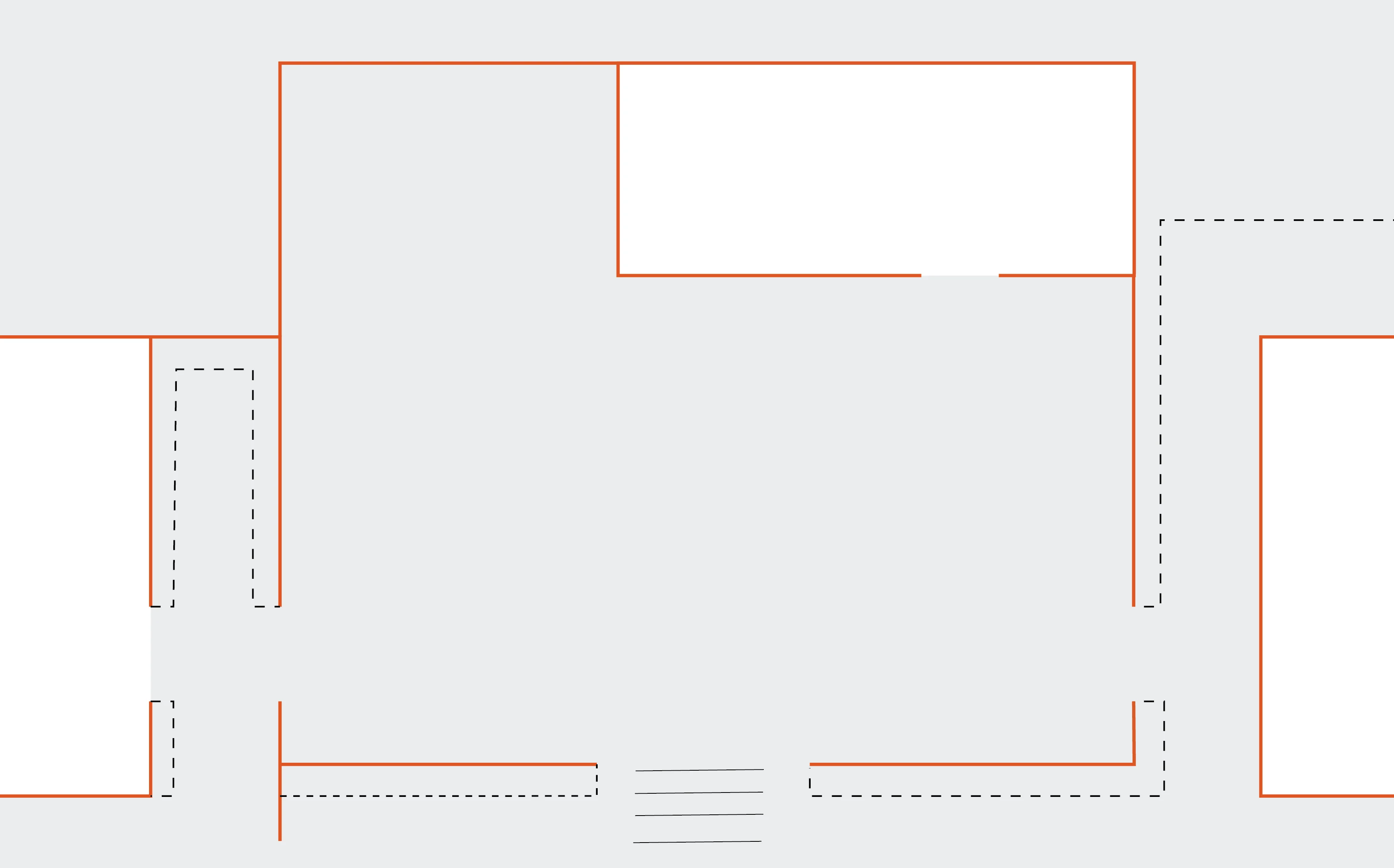
SHOTYARD
WATER COLLECTION
This well forms part of a wider system of water storage beneath the site.
Gibraltar has no natural freshwater supply, so rainwater was collected and stored in underground cisterns. Channels cut into the stone around these buildings directed water into tanks, where it could be preserved for long periods.
Original plans show multiple water tanks associated with this site, with additional cisterns located nearby.
The success of this system meant that water did not become a major problem during the Great Siege, even when the population exceeded 7,000. Across Gibraltar, houses and military buildings were designed to capture rainwater, while wells, and an earlier Moorish aqueduct systems supplemented supply.
THE 4-POUND SOLID SHOT & PROTECTION FROM INCOMING SHOT
The 4-Pound Solid Shot
This well-preserved cannonball was uncovered in the yard during restoration works. Its significance lies not only in its survival, but in what was discovered around it. The surrounding material, known as slag, is waste from iron smelting and is typically associated with furnaces or small-scale foundries. The shot itself was cast in a two-part mould, leaving a visible seam across its surface. It also bears the Broad Arrow, a British government mark used to denote official military property in the 18th century. Together, the cannonball and the concentration of slag point to activity on this site linked to the production or recycling of ammunition. During periods of intense demand, such as the Great Siege, damaged ironwork and spent shot were often melted down and recast locally to sustain the defence of Gibraltar.
Protection from Incoming Shot
Gun embrasures, magazines, and other exposed positions required constant protection from enemy fire. To reduce damage to masonry, defenders placed earth-filled barrels and wickerwork screens in front of vulnerable areas. These acted as shock absorbers, softening the impact of incoming shot. Such defences were known as gabions. Alongside these, bundles of brushwood and branches were tightly bound together to form fascines. Positioned in the same way, they helped absorb impact and reinforce defensive lines. Both gabions and fascines were simple but effective, though they required continual repair and replacement under the strain of bombardment
ALCHEMY LAB
This building served as a laboratory for the preparation of gunpowder and specialised ammunition.
Here, shells were assembled, fuse lengths were cut, and explosive mixtures were prepared for use in the surrounding batteries. Accuracy was critical, as small variations could affect how and when a shell detonated.
During the Great Siege, work carried out in spaces like this contributed to the development of airburst shells. At the same time, Captain Witham developed a mixture that burned brightly enough to detect enemy movement at night. These were known as star shells and are the early form of what we would now call flares.
The building was not used as accommodation. The guardroom for the site was located separately, across the road.
Its function changed over time. In the 19th century it became a shifting room, used by soldiers changing over during guard duties.
In the years leading up to and during the Second World War, it was repurposed as a Royal Engineers store.
RESTORATION WORKS
Over a 10 month period, Wrighttech Ltd alongside restoration expert Manuel Jaén, carried out extensive conservation and renovation works, culminating in the reopening of the site in May 2026. The project focused on preserving the site’s original character while ensuring long-term structural stability, accessibility, and an enhanced visitor experience for generations to come.
Throughout the works, several important discoveries were uncovered, including the original watchtower, historic wells, graffiti inscriptions, and a collection of 18th-century artefacts offering valuable insight into life during the Great Siege. Many of these artefacts were carefully conserved and are now displayed on site as part of the visitor experience.
The most complex and time-intensive aspect of the project was the restoration of the roofs of the two historic magazines. Extensive conservation works included the removal of invasive vegetation, cleaning and restoring the original 18th-century tiles, and replacing damaged or missing tiles with carefully matched replicas. The roofs and structures were consolidated using specialised grouting techniques and advanced waterproofing systems to protect against water ingress and future deterioration. In addition, the courtyard laboratory building, which had lost its original roof over time, received a completely new roof as part of its full restoration.
The exterior walls of the magazines were repaired using the original mortar to maintain historical authenticity, while interior walls were structurally restored using methods that respected the original construction. Floors were also carefully cleaned, stabilised, and restored to preserve their original fabric and appearance.
To improve visitor access, new footpaths and fencing were installed to create safe, fully accessible routes throughout the site. Updated signage and interpretation panels were introduced to explain the site’s historical significance and daily life during the siege, while the surrounding gardens were renovated into a peaceful space for visitors to sit, reflect, and appreciate the atmosphere of this important heritage location
POCK-MARKED WALLS
This section of wall bears a different kind of mark. Deep pockmarks scatter the stone, distinct from carved names or drawings, suggesting repeated impact rather than deliberate inscription.
One interpretation is that these marks were created by musket fire. The courtyard is thought to have predated the construction of the surrounding magazines, and the short distances involved here would not align with formal firing practice. Instead, it raises the possibility that soldiers used this space to test black powder prepared on site, discharging weapons into the walls at close range.
Set among these impacts is a name, “Crow,” carefully inscribed in an elegant hand. Its presence offers a quiet contrast. Where the pockmarks speak to action, impulse, or necessity, this inscription reflects intention and skill. It also serves as a reminder that literacy within the ranks was more common than is often assumed.
REGIMENT GRAFFITI
This section of wall brings together a dense cluster of names, dates, and regimental markings, offering a rare glimpse into the identities of those who once occupied this space.
Among them is the name “Ince”. While it cannot be definitively proven that this refers to the well-known military engineer of the Great Siege, the connection is compelling. Sergeant-Major Henry Ince was the driving force behind the creation of Gibraltar’s famous siege tunnels in 1782, carving artillery galleries into the Rock to defend against Spanish and French forces. His work transformed the defensive capabilities of the garrison and remains visible today.
Whether this inscription refers to the same man, a younger version of him, or another soldier entirely, it highlights how these walls intersect with the lives of individuals who shaped Gibraltar’s history.
Also visible is a reference to the “43” likely indicating the 43rd (Monmouthshire) Regiment of Foot. Raised in 1741, this regiment served across the British Empire during the 18th century, including garrison duties and major campaigns in North America and the Caribbean.
Its presence here suggests the movement of regiments through Gibraltar, a key military hub linking Britain’s global operations.